Dr. Danielle Andrade is the founder and director of the Adult Genetic Epilepsy (AGE) program at Toronto Western Hospital, University of Toronto, which is one of a kind clinical and research program.
She and her team have helped several patients during their journey of rare unexplained intractable seizures, transforming the “unknown” into a diagnosis leading to tailored precision medicine for this group of patients.
As well as general research below, four themes have emerged that may be of interest:
Education for Adult Neurologists on Pediatric-Onset Epilepsies
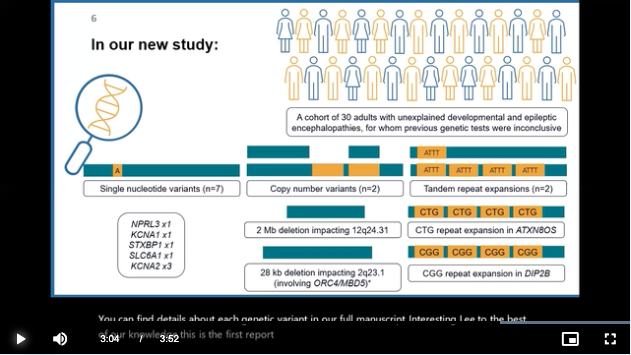
Genome sequencing identifies rare tandem repeat expansions and copy number variants in Lennox–Gastaut syndrome
This study demonstrates that using whole-genome sequencing, the examination of multiple types of rare genetic variation, including those found in the non-coding region of the genome, can help resolve unexplained epilepsies.
Genetic Approaches to Comorbidities in Epilepsy, Dravet Syndrome: Danielle Andrade, MD, MSc, FRCPC
“When you talk about comorbidities in epilepsy, there are several types, for instance, depression, anxiety, headaches, sleep problems, but then there are things like autism, intellectual disability. Some of these comorbidities are caused by an interaction of some genetic background, but environment as well.”
Danielle Andrade, MD, MSc: Education for Adult Neurologists on Pediatric-Onset Epilepsies
For quite some time, the adult neurologist caring for the patient with epilepsy would encounter patients with epilepsy, but without a diagnosis, then referred to as symptomatic epilepsy. Patients would experience these diseases and undergo a number of exams, tests, and evaluations, only to fail to be properly diagnosed.
These physicians now have the good fortune of having next-generation sequencing and screenings, previously undiagnosed conditions—such as STXBP1 encephalopathy, PCDH19 epilepsy, and SCN1A mutations, to name a few—can now be addressed. New therapies and research have helped open the door for better methods of treatment.
Although, for Danielle Andrade, MD, MSc, professor of medicine, neurology, University of Toronto, who treats these pediatric patients, there is still a gap in the understanding of how to treat these childhood-onset diseases. To find out more about this gap, NeurologyLive spoke with Andrade at the 2019 International Epilepsy Congress, in Bangkok, Thailand.